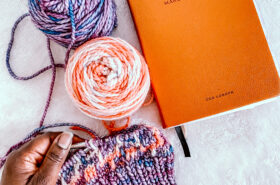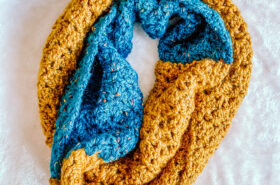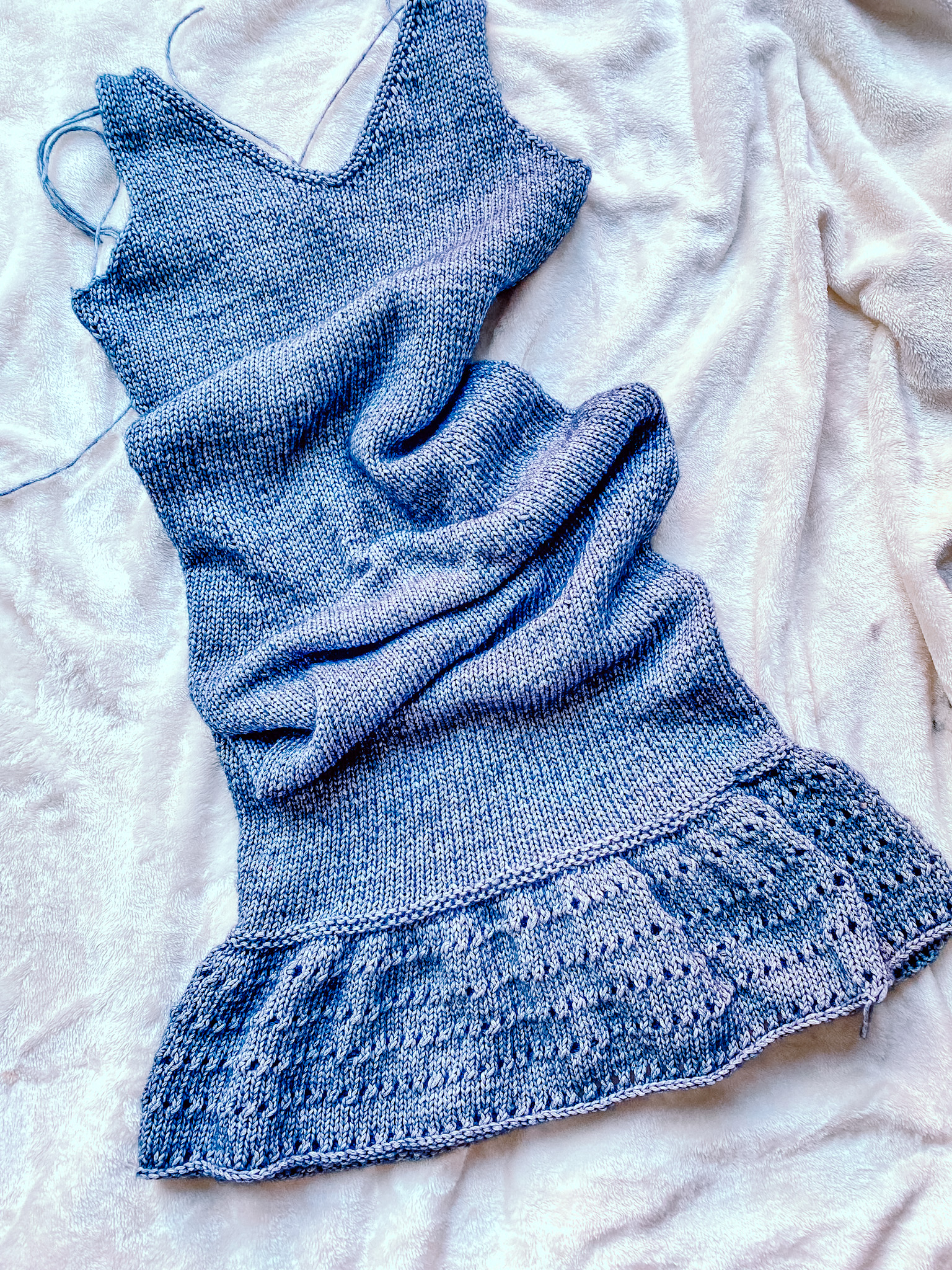
There’s a funny little moment that happens when you make something from an idea you had in your head. You finish it, try it on, feel so proud about what you’ve designed… and then someone says, “Do you have a pattern for that?”. Suddenly the lovely thing you made has become a question. Could this become a pattern? Could someone else make it from my instructions? And if the answer is yes… where on earth do I start?
I’ve been there. When I first started writing patterns, I didn’t have some beautifully organised design system. I had scribbled notes, stitch counts, half-remembered decisions and a finished item I was proud of. The design existed but turning it into something another knitter or crocheter could follow was a completely different skill.
The good news is that your design does not need to have started life as a perfectly planned pattern. Sometimes we design very intentionally from the beginning. Other times, we start making, change our minds halfway through, frog it, add a detail because it looks better that way and somehow end up with something we absolutely love. Both can become patterns.
One thing worth checking at this stage is that the design is genuinely yours to write up. Inspiration is everywhere, but there’s a difference between being inspired by a technique or silhouette and recreating someone else’s design too closely. If you’ve used a stitch pattern from a book, website or another source, make a note of where it came from too. Using a stitch or technique as part of your own design is one thing; reproducing someone else’s written instructions or chart is another, so check the source and any terms of use before including it in your pattern.
The real question is: can you explain how to make it again clearly enough that someone else could recreate it without needing you to explain further?
What makes a design pattern-ready?
Before you open a blank document and start trying to write instructions, it helps to look at what you already have. Do you know what yarn you used? What hook or needle size? Your gauge? The finished measurements? Do you remember how the piece was constructed?
If it’s a garment, do you know where you increased or decreased, how you shaped the neckline, how long the armholes are and roughly how the finished piece is intended to fit?
And probably the big one: did you take notes?
If you did, fantastic! If you didn’t, all is not lost. You may just need to sit with the finished item and reverse-engineer what you did, or make a second sample and take much more intentional notes as you go. That second sample can be incredibly useful anyway. You often notice things you would like to refine when you make a design again.
Your notes do not need to be pretty
Please don’t think “designer notes” need to look like some perfectly colour-coded notebook spread. Mine can be very practical. What matters is that you record enough information to understand your own decisions later.
Useful things to capture include:
- yarn and fibre details
- needle or hook size
- blocked gauge
- cast-on or starting stitch count
- stitch patterns used
- increase and decrease points
- row or round counts
- measurements at key stages
- finished measurements of the sample before and after blocking, where relevant
- construction method
- anything you changed while making the sample
If you plan to offer the design in more than one size, there will eventually be more measurements and calculations to consider. But don’t jump ahead just yet. At this stage, you’re simply capturing the DNA of the original design.
Could someone else follow what you did?
This is where designing shifts into pattern writing. You might understand that you “just kind of shaped the sleeve until it looked right”, but another maker cannot do much with that. A pattern needs to turn your instinct into something repeatable. Instead of writing something vague like, “decrease a few times near the wrist,” you eventually need to know something more like, “Decrease 2 sts every 8th round 5 times.”
That’s why the question isn’t simply, “Did I design something nice?” It is “can I turn the decisions I made into instructions another person can recreate?” If you can, you have the beginnings of a pattern.
What if the design isn’t quite right yet?
That’s completely normal too. Your first sample is allowed to be a prototype. Maybe the neckline needs to sit slightly lower, maybe the sleeve needs more room or maybe you wish you had used a different bind-off. Pattern writing gives you a chance to refine those things before you ask someone else to make it. In fact, one of the best things you can do is make a few notes under three simple headings:
What worked well
What I would change
What I want to try
A quick pattern-ready check
Before moving on, ask yourself:
- Could I recreate this design from my own notes?
- Do I understand how it is constructed?
- Do I know the important measurements and stitch counts?
- Can I explain the shaping rather than relying on instinct?
- Am I happy with the design, or do I know what I want to change?
You don’t need five perfect yeses. The answers simply tell you what to work out next.
A little exercise before you go
Pick one item you’ve designed and ask yourself: could I make this again without guessing?
Then write down three things:
- What I know for certain about this design.
- What I need to measure or work out.
- What I would change if I made it again.
That’s your starting point. You don’t need a finished pattern yet but enough information to begin turning the idea in your hands into instructions on a page, which is what we’ll get into next.
Next in the series: From Scribbled Notes to a Pattern Someone Else Can Follow
Interested in the free Idea to Pattern resources?
I’m putting together some free practical resources to accompany this series, including templates and checklists to help you organise your own pattern-writing process. If you would like to be the first to know when they’re ready, you can join the Idea to Pattern mailing list below.